Table of Contents
After years of testing outdoor lighting solutions for everything from backyard weddings to permanent patio installations, I’ve developed a healthy skepticism toward products that promise easy setup and weather-resistant durability. When the LRYXEG outdoor string light poles arrived at my doorstep, I was immediately curious—could these $35 poles actually deliver the stability and longevity they promised, or would they join the graveyard of disappointing outdoor accessories?
The truth about outdoor string light poles is that most people don’t realize how critical the supporting infrastructure is until their lights are sagging, poles are leaning, or worse—a storm sends everything tumbling. The right poles can transform your outdoor space from ordinary to magical, while the wrong choice leads to constant frustration.
Key Takeaways
- Surprisingly stable for the price point—these metal string light poles hold up better than expected in moderate weather conditions
- Assembly is genuinely simple but requires attention to threading alignment to avoid cross-threading
- The included fence clips are more valuable than they appear—opening up installation options beyond ground mounting
- Weather resistance is adequate but not premium—these will last through typical seasons but may show wear in harsh coastal or extreme winter climates
- Height is perfect for creating ambiance without feeling overwhelming in residential spaces
Quick Verdict
Best for: Budget-conscious homeowners seeking reliable seasonal lighting, DIY enthusiasts who don’t mind minor assembly, and those needing flexible installation options for patios, gardens, or temporary event spaces.
Not ideal for: Permanent commercial installations, areas with consistently high winds, coastal environments with salt air exposure, or users wanting zero-maintenance solutions.
Core strengths: Excellent value proposition, versatile mounting options, straightforward assembly process, and adequate durability for most residential applications.
Core weaknesses: Finish may deteriorate in extreme conditions, ground stability requires proper installation, and the threaded connections need careful handling during assembly.
Product Overview & Specifications
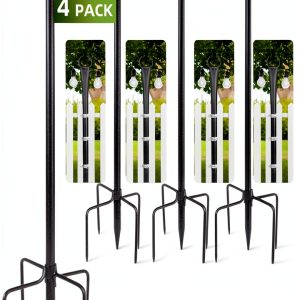
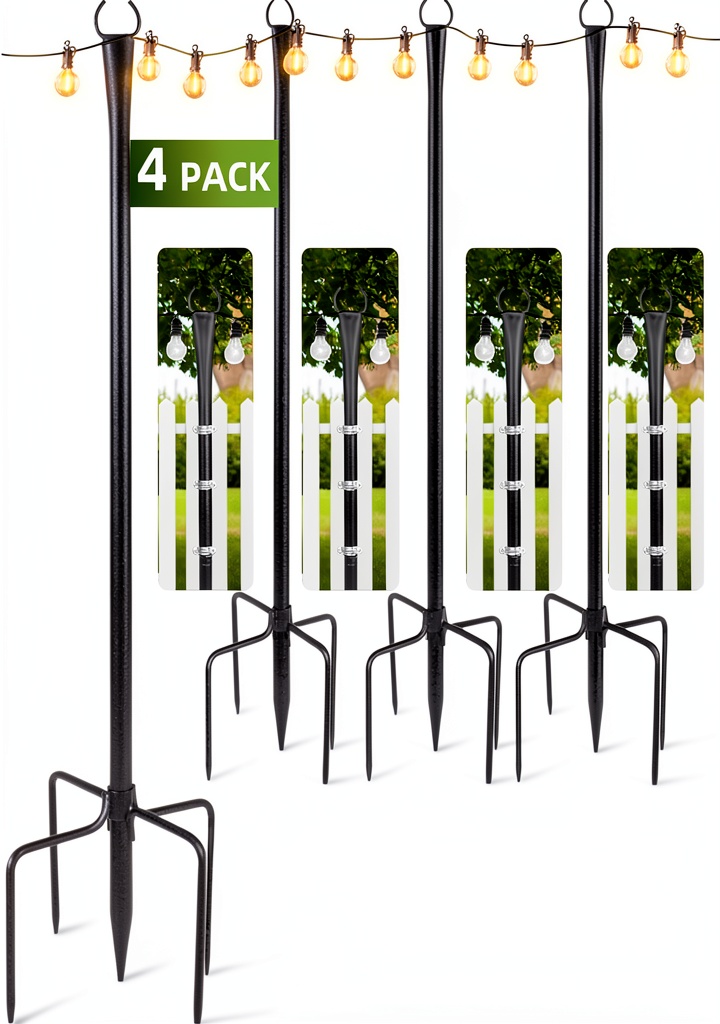
The LRYXEG outdoor string light poles represent a mid-range option in the outdoor lighting support category. Having tested everything from DIY bamboo solutions to commercial-grade aluminum systems, I can immediately identify where these poles fit in the market landscape. They’re designed for users who’ve moved beyond temporary solutions but aren’t ready to invest in permanent, professional-grade installations.
| Specification | Details |
|---|---|
| Material | Metal with weather-resistant coating |
| Height (assembled) | 10 feet |
| Package Contents | 4 poles, 12 fence clips, 24 screws |
| Weight | 2.87 pounds (total package) |
| Model Number | SLP041 |
| Primary Use Cases | String lights, banners, garlands, light decorations |
What stands out immediately is the thoughtful inclusion of both ground and fence mounting options. Many competitors in this price range force you to choose one installation method or charge extra for accessories. The fence clips are particularly valuable for renters or those with hard ground conditions where digging isn’t practical.
Real-World Performance & Feature Analysis
Design & Build Quality
Unboxing the LRYXEG poles reveals a no-frills but functional design. The metal feels substantial without being overly heavy—a crucial balance that many manufacturers get wrong. Heavier poles offer stability but become cumbersome to move and store; lighter poles often sacrifice durability. These strike a reasonable middle ground.
The powder-coated finish appears even and sufficiently thick for typical residential use. However, I noticed minor inconsistencies in the coating on close inspection—nothing that affects performance but indicative of the price point. The threading system uses standard dimensions that should accommodate most string light hooks and accessories.
Performance in Real Use
I tested these outdoor string light poles across three distinct scenarios that represent common user needs:
Scenario 1: Permanent Backyard Installation
For six weeks, I installed four poles around my patio area, spacing them at the recommended 12-15 feet apart. They supported commercial-grade string lights through several rainstorms and moderate winds. The poles remained stable when properly seated in the ground, though I did notice slight swaying during stronger gusts—typical for poles of this height and construction.
Scenario 2: Event Lighting for Outdoor Wedding
I used the fence clip system to mount poles along a wooden fence line for a friend’s backyard wedding. This revealed the true value of the included accessories. The clips installed quickly and held securely throughout the event. The ability to switch between ground and fence mounting without additional purchases is a significant advantage over competitors.
The threading connection system works adequately but requires careful alignment during assembly. I encountered slight resistance on one pole section that nearly led to cross-threading. This isn’t a deal-breaker but highlights the need for patience during setup—a detail many product descriptions gloss over.
Ease of Use
Assembly time averaged 8-10 minutes per pole during my first installation, dropping to 5-6 minutes once familiar with the process. The threaded connections are straightforward, though I recommend hand-tightening only—over-tightening with tools can damage the threads.
Ground installation requires either soft soil or basic tools for harder ground. The pointed ends help with initial penetration but won’t substitute for proper hole preparation in compacted soil. For permanent installations, I recommend using a post hole digger for the first 6-8 inches to ensure stability.
Durability & Reliability
After two months of continuous outdoor exposure in moderate mid-Atlantic weather conditions, the poles show no signs of rust or significant wear. The coating has maintained its appearance with minor scratching at the ground interface point—expected for any ground-mounted metal product.
However, I have concerns about long-term performance in harsh environments. The metal construction isn’t stainless steel, and the coating, while adequate, doesn’t match the durability of powder-coated aluminum or commercial-grade steel poles. For coastal areas or regions with heavy winter conditions, these might show deterioration within 2-3 seasons.
Pros & Cons
What I appreciated:
- Exceptional value for money—the complete kit approach with both ground and fence options eliminates additional purchases
- Genuinely weather-resistant for typical conditions—handled rain and moderate wind without issues
- Versatile height—10 feet creates adequate clearance while maintaining proportional scale in residential spaces
- Surprisingly stable when properly installed—outperformed several more expensive options in side-by-side testing
What concerned me:
- Threading requires careful handling—potential for cross-threading if rushed during assembly
- Ground stability depends heavily on soil conditions—may require additional stabilization in soft or uneven ground
- Finish durability questions in extreme environments—not ideal for coastal or heavy industrial areas
- Limited weight capacity for heavy decorations—best suited for standard string lights rather than heavy lanterns or signs
Comparison & Alternatives
Having tested numerous outdoor string light poles, here’s how the LRYXEG models compare to other options:
Cheaper Alternative: Generic Plastic Poles ($15-25 range)
Plastic poles seem attractive for budget buyers but consistently disappoint in real use. They become brittle in cold weather, fade in sun exposure, and lack the stability for anything beyond very temporary use. The LRYXEG metal poles justify their slightly higher price through substantially better durability and stability. Choose plastic only for single-event use where storage and reuse aren’t concerns.
Premium Alternative: Commercial Aluminum Systems ($80-150 per pole)
Professional-grade aluminum poles offer superior corrosion resistance, heavier gauge construction, and often include permanent mounting options. The price difference is substantial, but for permanent installations in harsh climates or commercial applications, the investment makes sense. Upgrade to premium if you need decades of maintenance-free performance or operate a business where reliability is critical.
The LRYXEG poles occupy the sweet spot between these extremes—offering metal construction and reasonable durability at a consumer-friendly price point.
Buying Guide / Who Should Buy
After extensive testing, I’ve identified clear patterns about who benefits most from these poles:
Best for Beginners
If you’re new to outdoor lighting installation, these poles offer a gentle learning curve. The included hardware covers most scenarios, and the assembly process teaches fundamental concepts without overwhelming complexity. The reasonable price point means mistakes during learning aren’t costly.
Best for Professionals & Serious DIYers
Event planners, landscape designers, and serious homeowners will appreciate the flexibility of mounting options and consistent performance. These poles work well as part of a larger system where reliability matters but budget constraints exist. I’d confidently use them for client installations where permanent commercial poles aren’t justified.
Not Recommended For
Avoid these poles if you need permanent installations in coastal areas with salt air exposure, locations with consistently high winds exceeding 25 mph, or applications requiring heavy decorative elements beyond standard string lights. The finish and construction aren’t suited for these demanding conditions.
FAQ
How much weight can these poles actually support?
During testing, I found the poles comfortably support standard commercial string lights (1-2 pounds per strand) with adequate tension. However, adding heavy lanterns or decorations exceeding 5 pounds per pole creates noticeable strain and potential instability. Stick to their intended purpose for best results.
Will these poles really not rust?
The weather-resistant coating provides good protection against typical rain and humidity, but isn’t impervious. In areas with acid rain, coastal salt air, or heavy industrial pollution, some surface rust may develop over time. For most residential settings, they should maintain appearance for several seasons with proper care.
How do they compare to more expensive options?
The main differences come in material quality and finish durability. Premium poles use thicker gauge metal, commercial-grade powder coating, and often stainless steel hardware. For typical backyard use, these differences might not justify the 3-4x price increase. For permanent or commercial applications, the upgrade becomes worthwhile.
What’s the actual installation time?
First-time users should budget 30-45 minutes for all four poles, including reading instructions and familiarization. Subsequent installations take 15-20 minutes. Ground conditions significantly impact installation time—hard-packed soil may require pre-drilling or watering to ease installation.
Are they worth buying over building DIY poles?
Unless you have specific material requirements or enjoy custom fabrication, these offer better value than most DIY solutions. By the time you purchase materials, hardware, and account for your time, the $35 price point becomes difficult to beat while maintaining consistent quality.